Surviving by Owning Data, Workflows, and Compliance: The Modern Business Playbook
Learn how owning your data, workflows, and compliance capabilities helps your business survive vendor lock-in, audits, incidents, and scaling challenges—and how to build a practical roadmap.
“Survival” in today’s digital economy rarely means beating a competitor on a single feature. It means staying operational when systems change, vendors consolidate, regulations tighten, and customers demand trust. Companies that endure tend to do three things exceptionally well: they own their data, they own their workflows, and they operationalize compliance as a repeatable capability—not a last-minute scramble.
This article breaks down what “ownership” really means in each area, why it’s become a competitive necessity, and how to build a practical roadmap without boiling the ocean.
1) What “Owning” Really Means (and What It Doesn’t)
Ownership isn’t about refusing SaaS tools or building everything in-house. It’s about maintaining control over how your business runs and how it proves that it runs correctly.
- Owning data means you can access, export, interpret, govern, and migrate your critical information without undue friction or dependency on a single vendor’s internal formats.
- Owning workflows means the logic of how work gets done is documented, versioned, testable, and portable—so you can change tools without breaking operations.
- Owning compliance means you can demonstrate adherence to applicable requirements through evidence, controls, and traceability—continuously, not just during audits.
In short: tools may be rented, but control cannot be.
2) Why Data Ownership Is a Survival Skill
Data is the memory of your business: customers, transactions, product telemetry, support history, risk decisions, and financial records. When you don’t control it, you don’t fully control your future—especially during vendor changes, incidents, mergers, or regulatory inquiries.
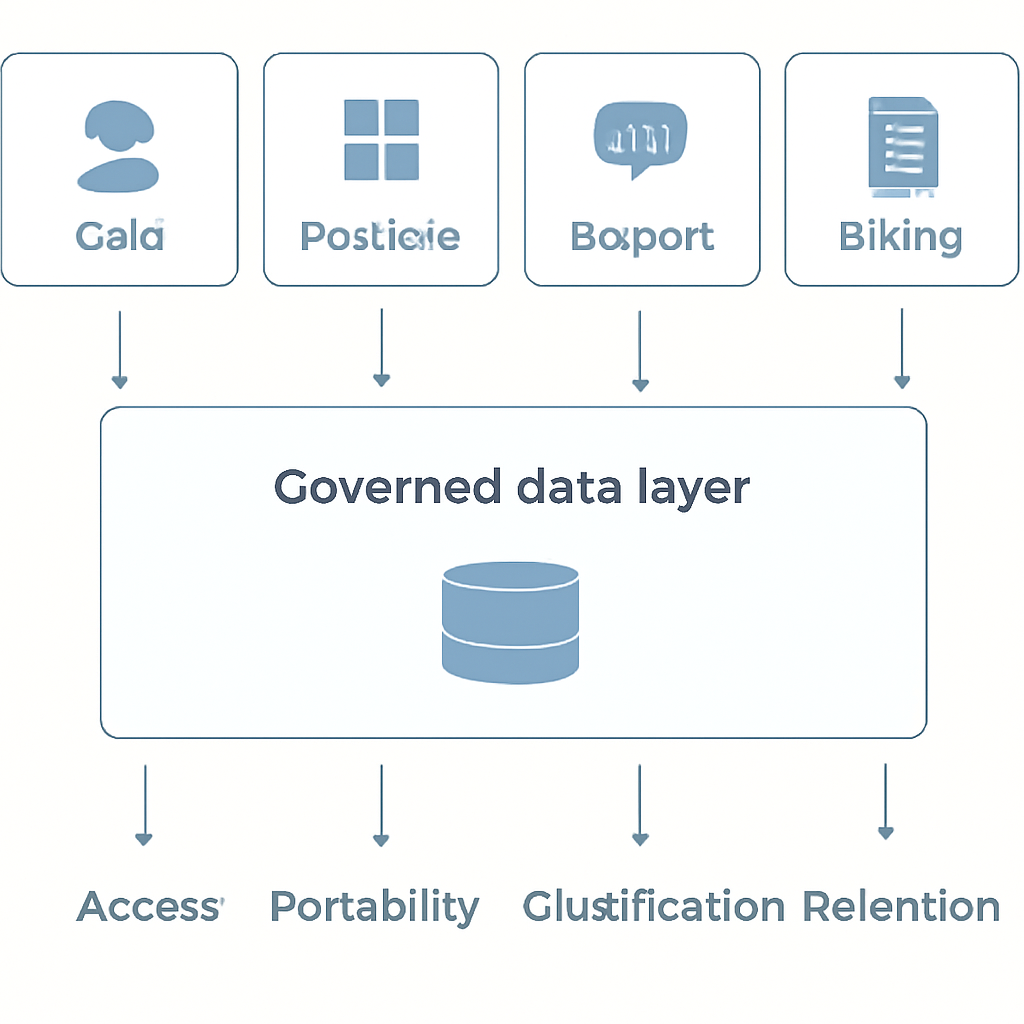
Key components of real data ownership
- Data access and portability: You can export complete datasets in usable formats and move them to another system without losing meaning (schemas, relationships, timestamps, audit fields).
- Clear source of truth: Each critical data domain has an authoritative system and defined interfaces (APIs, pipelines) to reduce duplication and ambiguity.
- Governance and classification: You know what data you have, where it lives, who can access it, and how sensitive it is (e.g., personal data, financial data, credentials).
- Retention and deletion: You can retain records as required and delete data when required—consistently and provably.
- Resilience: Backups, recovery testing, and access controls reduce the chance that a single failure or compromise becomes an existential threat.
A practical indicator: if you had to switch your CRM, payment processor, or analytics platform in 30 days, could you do it with minimal loss of history and minimal downtime? If the answer is “no,” data ownership is an immediate priority.
3) Workflow Ownership: The Difference Between “Using Tools” and “Running a Business”
Workflows are the repeatable sequences that turn intent into outcomes: onboarding a customer, shipping a release, approving an expense, handling an incident, responding to a data request, closing the books. When workflows only exist as tribal knowledge inside a tool—or inside a few people’s heads—your organization becomes fragile.
What workflow ownership looks like in practice
- Documented processes: Critical workflows are written down in an accessible system (not scattered across chat threads).
- Defined roles and handoffs: Ownership, approvals, and escalation paths are explicit, reducing bottlenecks and ambiguity.
- Versioning and change control: When workflows change, you can explain what changed, why, and when—and roll back if necessary.
- Automation with guardrails: Automations are observable and tested, with clear failure handling (alerts, retries, manual fallback).
- Portability: Workflow logic is not locked in a proprietary corner; it’s represented in reusable patterns, templates, or orchestrations that can be moved or re-implemented.
Workflow ownership is also a risk-control strategy. If a key platform goes down or a vendor changes pricing or terms, portable workflows limit downtime and prevent operational paralysis.
4) Compliance Ownership: Turning “Audits” Into a Continuous Capability
Compliance is often treated as paperwork—until it becomes a sales blocker, a legal emergency, or a reputational event. Ownership means you can reliably produce evidence of how you operate: who had access, what changed, when it changed, and whether it followed policy.
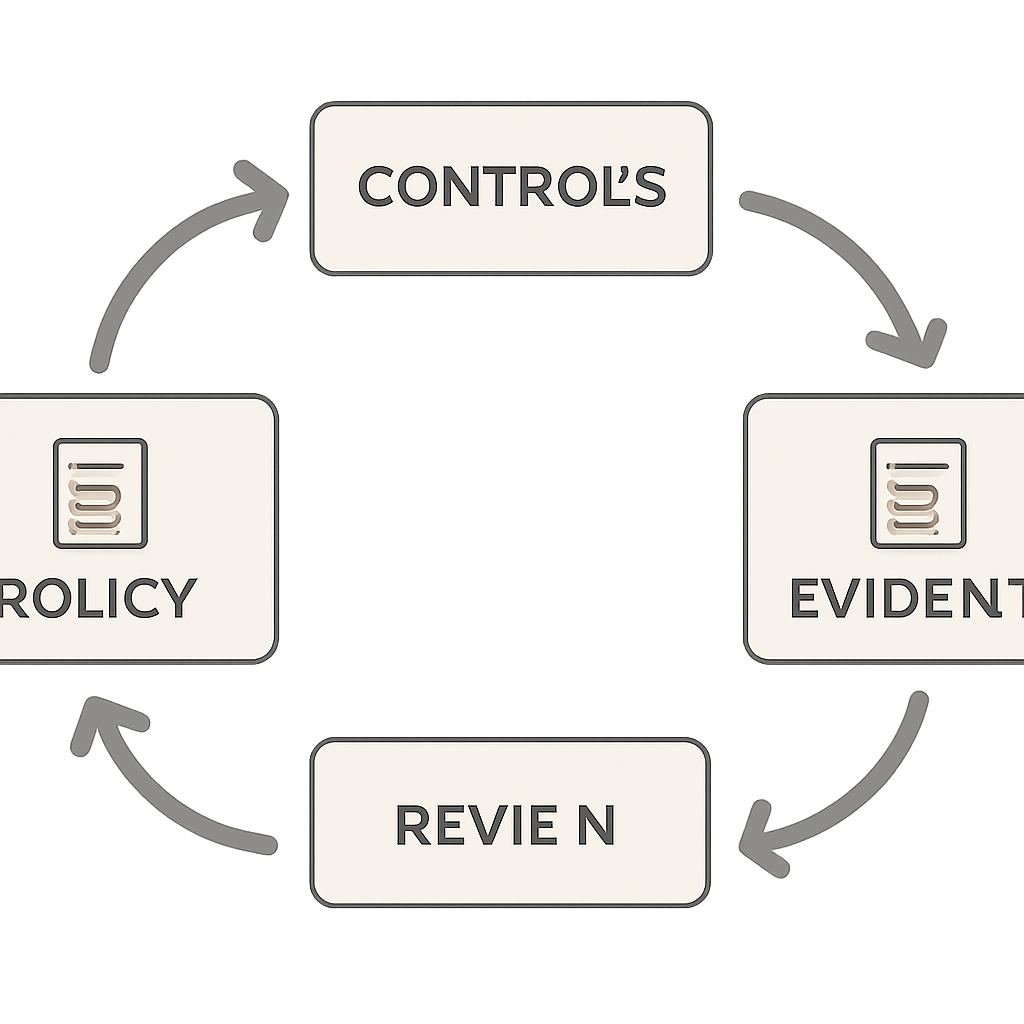
Different industries face different requirements (privacy laws, security expectations, financial controls, industry standards). Rather than chasing every acronym, focus on building a durable compliance engine: controls, evidence, and traceability that can map to multiple frameworks.
Core building blocks of compliance ownership
- Control design: Translate obligations into specific, testable controls (e.g., access reviews, logging, approval steps, backup testing).
- Evidence by default: Systems generate audit trails automatically (tickets, logs, change records), instead of manual screenshots at audit time.
- Policy-to-practice alignment: Policies reflect what is actually done; workflows enforce policies so compliance is not optional.
- Vendor and third-party oversight: You know which vendors touch sensitive data and have a process to assess and monitor them.
- Incident readiness: Clear incident response procedures, including communication, containment, remediation, and documentation.
5) The Compounding Effect: Data + Workflows + Compliance Reinforce Each Other
These three forms of ownership are mutually reinforcing:
- Owned data makes compliance provable (you can locate records, show lineage, and produce exports).
- Owned workflows make compliance repeatable (controls are embedded, approvals are captured, exceptions are handled).
- Owned compliance reduces operational risk (clear access rules, logging, and incident processes protect data and workflows).
Together, they reduce vendor lock-in, shorten recovery time during incidents, speed up audits and customer security reviews, and make the business easier to scale.
6) Common Failure Modes (and How to Avoid Them)
- Mistaking “we can export a CSV” for data portability: Exports often omit relationships, history, or metadata. Validate exports by re-importing into a test environment and checking completeness.
- Automating chaos: Automation amplifies whatever process you already have. Fix the workflow first, then automate stable steps with monitoring and fallbacks.
- Policy theater: Policies that don’t match reality create audit risk. Ensure workflows and systems enforce the policy (permissions, approvals, logging).
- Over-reliance on one person: If one admin or engineer is the only one who understands critical systems, you have an operational single point of failure. Document and cross-train.
- Treating compliance as a once-a-year sprint: Evidence collection is easiest when it’s continuous and built into daily tools and routines.
7) A Practical Roadmap: Start Small, Build Leverage
You don’t need a massive transformation program to regain control. Use a phased approach that prioritizes risk and unlocks speed.
Phase 1: Identify what’s existential
- List your “crown jewel” data domains (customer records, billing, authentication, financial reporting, production logs).
- Map critical workflows (release process, incident response, customer onboarding, access provisioning).
- Identify high-impact compliance obligations (privacy requests, access controls, audit logs, retention requirements) based on your business and markets.
Phase 2: Establish minimum viable ownership
- Implement reliable exports and backups for critical systems; test restores.
- Centralize process documentation for critical workflows; define owners and escalation paths.
- Turn on or standardize audit logging where feasible; ensure logs are protected from tampering and retained appropriately.
Phase 3: Make it repeatable
- Define a data catalog or at least a lightweight inventory: what data exists, where it lives, who owns it.
- Introduce change management for key workflows (simple versioning, approvals, and post-change verification).
- Create control checklists and schedules (access reviews, backup tests, vendor reviews) and store evidence as you go.
Phase 4: Optimize for portability and resilience
- Reduce dependence on tool-specific workflow logic where it creates lock-in; prefer documented, portable patterns.
- Add monitoring and alerts for workflow automation failures and data pipeline health.
- Regularly run “exit drills”: simulate switching a vendor or restoring from backups to validate assumptions.
8) What to Measure (Without Inventing Vanity Metrics)
Choose metrics that indicate control, recoverability, and audit readiness. Examples include:
- Recovery readiness: whether backup restores are tested and how long restoration takes for critical systems.
- Portability readiness: time and completeness to export and reconstitute a core dataset in a new environment.
- Workflow reliability: number of critical workflows with documented owners, defined steps, and monitored automations.
- Evidence coverage: percentage of key controls with evidence captured continuously (e.g., access reviews completed on schedule).
- Operational risk reduction: number of single points of failure removed (systems or people) for critical operations.
Conclusion: Ownership Is the New Moat
Owning data, workflows, and compliance doesn’t mean rejecting modern platforms. It means designing your business so that platforms can change without breaking you—and so that trust can be proven when it matters. In a world of shifting regulations, vendor volatility, and rising customer expectations, operational ownership is not overhead. It’s how you survive—and how you stay free to grow.