Authentication Patterns: Next.js vs Remix (Sessions, Cookies, and Modern Auth Flows)
Compare authentication patterns in Next.js vs Remix: sessions, cookies, route protection, OAuth/OIDC callbacks, CSRF considerations, and practical best-practice defaults.
Authentication in React meta-frameworks is less about “logging in” and more about where you validate identity, how you persist it (cookies/sessions/tokens), and how reliably you can protect routes and data. Next.js and Remix both run on the server and both can implement the same standards (cookie sessions, OAuth/OIDC, passkeys, etc.), but their routing and data-loading models lead to different day-to-day patterns. This guide compares practical authentication patterns in Next.js vs Remix, with an emphasis on server-side validation, session cookies, route protection, and OAuth integration points.
What “good auth” looks like in both frameworks
- Validate on the server (never trust the browser): verify session cookies or tokens server-side before returning protected data.
- Use HttpOnly, Secure cookies for session state when possible (reduces XSS risk).
- Centralize authorization checks near data access (e.g., loaders/actions or server route handlers).
- Handle CSRF correctly when using cookies for auth (framework patterns differ).
- Make redirects and error states explicit (unauthorized vs forbidden vs not found).
Mental model differences that shape auth patterns
Next.js and Remix both support server rendering and can run on Node or edge-like runtimes (depending on deployment), but their “where does data come from?” story differs: • Next.js (App Router): server components + Route Handlers + Server Actions. Auth checks often live in server components (for gating UI), in route handlers (for API-like endpoints), middleware (for early redirects), or in server actions (for form submissions). • Remix: loaders and actions are first-class. Auth checks typically live in loaders/actions, and protected UI is a natural byproduct of protected data. Because loaders run before rendering, Remix encourages “auth at the boundary” of each route module.
Core building block: cookie-based sessions (recommended default for many apps)
For many web apps, the most straightforward pattern is a server-managed session stored in a cookie (often a signed/encrypted cookie containing a session id or session data). This avoids putting long-lived access tokens in JavaScript-accessible storage. In both Next.js and Remix you can: • Set a session cookie on login. • Read and validate it on every request that needs authentication. • Destroy it on logout. Where they differ is ergonomics: Remix provides dedicated session utilities in its runtime packages, while in Next.js you typically choose a session library or roll a minimal cookie/session layer using the platform primitives.
Next.js authentication patterns (practical options)
Next.js gives you multiple places to enforce auth; the “best” choice depends on what you’re protecting: pages, server-rendered data, API endpoints, or mutations.
1) Middleware for early redirects and coarse route protection
Use middleware when you want to block/redirect requests before they hit your route code (e.g., redirect unauthenticated users away from /app/*). Middleware is best for coarse checks because it runs on every matched request and has runtime constraints depending on deployment. Typical pattern: • Read a cookie. • If missing/invalid, redirect to /login with a returnTo parameter. • Allow request through otherwise. Caveat: middleware should not become your only authorization layer. You still need server-side checks at the data boundary (route handlers/server components) to prevent direct access.
2) Server Components for gating UI (and fetching protected data)
In the App Router, server components can read cookies/headers and decide what to render or whether to redirect. This is a strong fit when: • The page is fully server-rendered. • You want the auth check to happen before any protected data is fetched. Common approach: • Read session cookie with Next’s server APIs. • Validate session. • Fetch protected data. • Render or redirect.
3) Route Handlers for API-style endpoints
Route Handlers (e.g., in app/api/*) are ideal for: • JSON endpoints used by the client. • Webhooks and integrations. • OAuth callbacks (depending on your setup). Pattern: • Parse cookies. • Validate session. • Return 401/403 or data. This resembles traditional API auth and maps well to existing backend conventions.
4) Server Actions for mutations (forms, button clicks)
Server Actions let you run server-side mutations without manually creating an API route. Auth checks belong inside the action: • Validate the session at the start of the action. • Authorize the specific operation (e.g., user owns the resource). • Perform mutation. • Return a result or redirect. This keeps sensitive logic and secrets on the server, but you still need to ensure you’re using appropriate anti-CSRF measures for cookie-based auth (see CSRF section below).
Remix authentication patterns (practical options)
Remix’s loader/action model makes auth feel “built-in” because each route module is already split into: • loader: read data (runs on navigation and initial request) • action: handle mutations (typically from forms) You protect data by protecting the loader, and you protect mutations by protecting the action.
1) Route-level protection with loaders
A common Remix pattern is a small helper like requireUser(request) used by protected loaders: • Read session from cookies. • If no user, throw a redirect to /login. • Else return the user (or user id). This results in a consistent, route-by-route protection strategy that naturally prevents data leakage because the UI depends on loader data.
2) Action-level protection for mutations
Remix actions are a natural fit for secure form handling: • Validate session. • Validate form input. • Authorize operation. • Perform mutation. • Return data or redirect. Because Remix heavily encourages native forms, you also get a straightforward posture for CSRF defenses (again, see below).
3) Root loader for “session everywhere”
Many Remix apps put session lookup in the root loader so user state is available to all routes. You can still enforce protection in specific route loaders, but the root loader helps with: • Showing logged-in UI (avatar, nav). • Avoiding duplicate session parsing. Be careful not to put sensitive data in the root loader if it would be sent to pages that don’t need it.
OAuth/OIDC login flows: where each framework plugs in
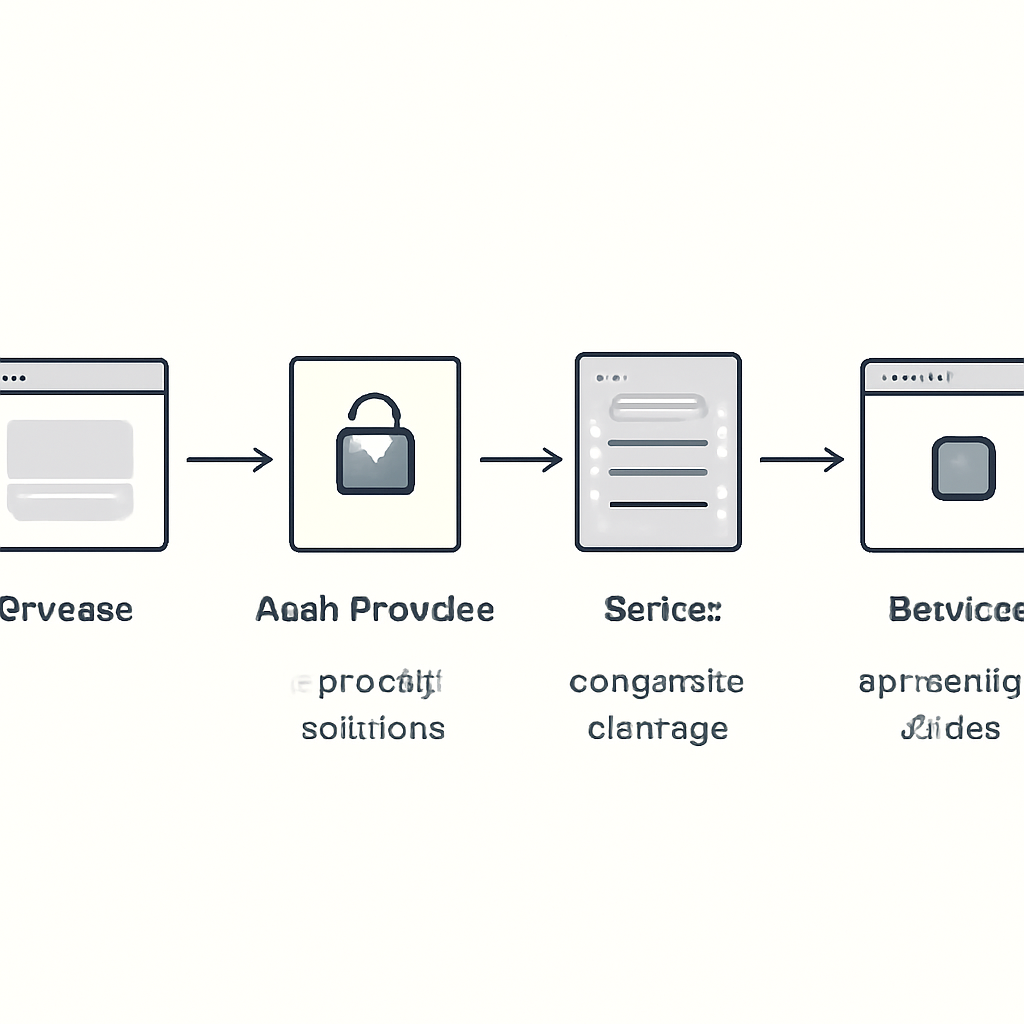
Both frameworks can implement OAuth 2.0 / OpenID Connect through an auth library or custom integration. The flow is the same conceptually: 1) Redirect user to provider 2) Provider redirects back with code 3) Server exchanges code for tokens 4) Server establishes app session (often cookie-based) 5) User is redirected into the app The difference is mostly the “callback handler” location: • Next.js: commonly handled in a Route Handler (or a library-managed route). Some setups also involve middleware for redirect logic. • Remix: commonly handled in an action/loader for a callback route, then commit the session cookie in the response. In both cases, keep token exchange and client secret usage strictly server-side.
CSRF considerations (especially with cookie-based auth)
If your authentication is cookie-based, your browser will automatically attach cookies on cross-site requests. That’s why CSRF protections matter for state-changing operations. Practical guidance: • Prefer SameSite=Lax (or Strict where possible) on session cookies. • Use anti-CSRF tokens for state-changing requests when needed. • Be extra careful with cross-site POSTs and embedded contexts. How it tends to play out: • Next.js: If you rely on Server Actions or Route Handlers with cookie auth, ensure you have a CSRF strategy appropriate to your app (SameSite settings, origin checks, CSRF tokens, or a well-reviewed library). • Remix: With form-based actions, it’s common to include and validate CSRF tokens (or rely on strict same-origin + SameSite, depending on your threat model). Remix doesn’t “auto-solve” CSRF, but its form-centric approach makes robust patterns straightforward.
Authorization: don’t stop at “is logged in”
Authentication answers “who is this user?” Authorization answers “can they do this specific thing?” In both Next.js and Remix: • Enforce authorization closest to the data access (database query layer or server-side handler). • Prefer resource-based checks (ownership, org membership, role/permission) over UI-only gating. • Return 404 for resources the user shouldn’t know exist when appropriate (depends on product requirements).
Common authorization patterns
- Per-route checks (Remix loaders / Next server components) for broad access control
- Per-operation checks (Remix actions / Next server actions) for mutations
- Policy helpers (e.g., canEditPost(user, post)) used consistently across the server layer
- Multi-tenant scoping (always query by tenantId/orgId + resourceId)
Developer ergonomics: choosing the “default” pattern
If you want a simple, repeatable approach, these defaults tend to work well: • Next.js default: cookie session + auth check in server components for pages, route handlers for APIs, and server actions for mutations; optional middleware for broad redirects. • Remix default: cookie session + requireUser in loaders/actions; root loader for lightweight user context. Both can be equally secure; the difference is which framework makes the “secure thing” feel most natural in daily development.
Pitfalls to avoid (in either framework)
- Putting access tokens in localStorage/sessionStorage (increases XSS impact).
- Relying only on client-side route guards (users can still call endpoints directly).
- Forgetting to rotate session identifiers on privilege changes (e.g., login).
- Over-sharing user/session data to the client (send only what’s needed).
- Not considering logout invalidation (server-side revocation if you need it).
- Treating middleware redirects as a substitute for authorization checks at the data layer.
When to choose Next.js vs Remix for auth-heavy apps
Choose Next.js if you want: • A broad ecosystem with many auth integrations and hosting options • Flexibility to mix server components, handlers, and actions in one app • Middleware-based pre-routing controls Choose Remix if you want: • A highly consistent loader/action auth pattern across the entire app • Route-module boundaries that encourage “protect data first, UI follows” • A form-first approach that pairs well with session cookies Either way, the most important decision is the pattern you’ll apply consistently: server-side validation, cookie/session hygiene, and authorization near the data.
Conclusion
Next.js and Remix can both implement robust authentication with modern best practices. Next.js offers multiple enforcement points (middleware, server components, route handlers, server actions), while Remix pushes you toward a uniform “auth in loaders/actions” approach. If you standardize on cookie-based sessions, enforce authorization at the server/data boundary, and treat CSRF as a first-class concern, you can build a secure, maintainable auth layer in either framework.