Merchant of Record (MoR): Definition, Responsibilities, and Why It Matters
Learn what a Merchant of Record (MoR) is, how it differs from payment processors, and the key responsibilities it assumes: payments, taxes, compliance, refunds, and chargebacks.
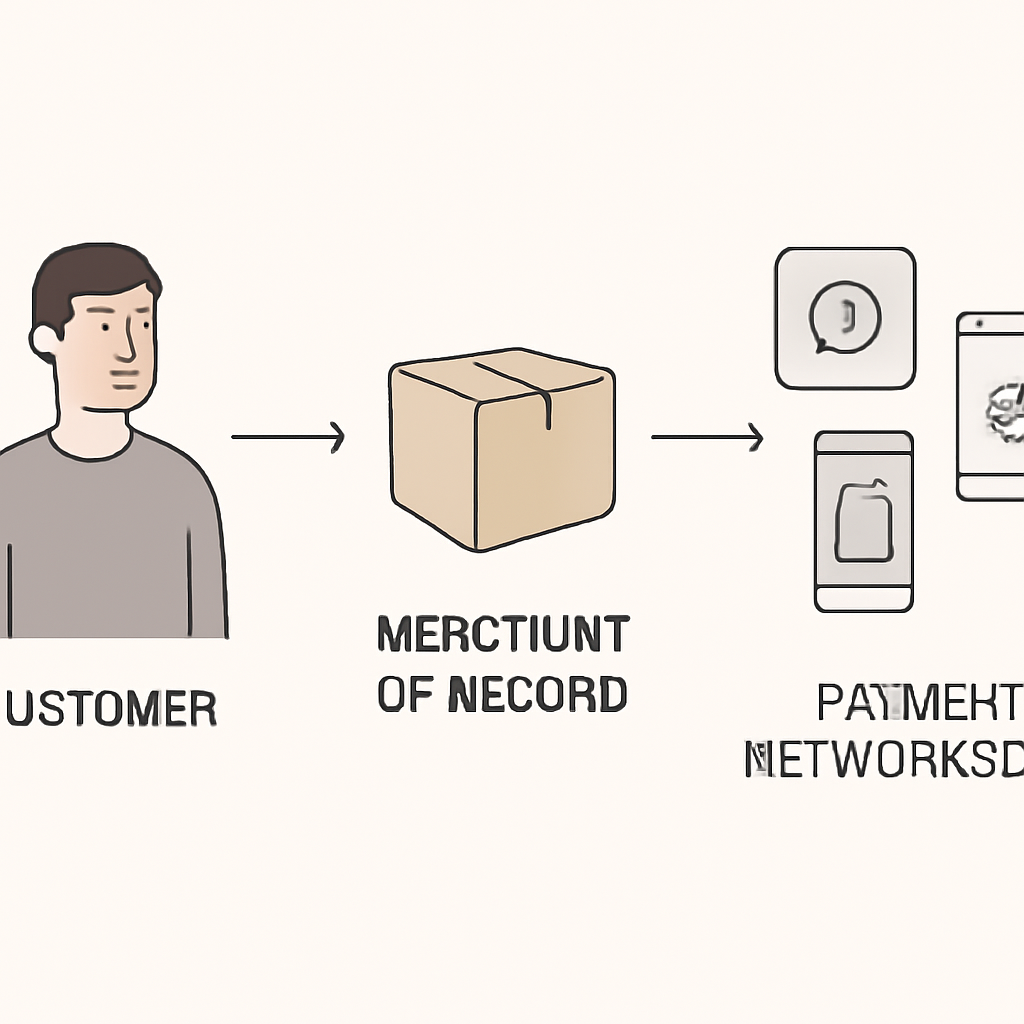
A Merchant of Record (MoR) is the legal entity responsible for selling goods or services to the end customer in a payment transaction. In practical terms, the MoR is the “seller of record” on the customer’s receipt and card statement, and it assumes primary responsibility for collecting payment, calculating and remitting applicable taxes, and handling compliance obligations related to the sale.
Businesses use a Merchant of Record model to reduce operational burden and risk when selling online—especially across borders—because the MoR can centralize payments, fraud management, chargebacks, tax handling, and regulatory requirements that otherwise fall on the seller.
What Is a Merchant of Record (MoR)? (Simple Definition)
A Merchant of Record is the party that is contractually and legally responsible for the transaction with the buyer. When a customer pays, the MoR is the entity that:
- Appears as the merchant on the customer’s payment statement
- Is responsible for payment acceptance and settlement
- Is accountable for sales tax/VAT/GST collection (where applicable) and remittance
- Manages chargebacks, refunds, and many customer payment disputes
- Must meet relevant payment and ecommerce compliance requirements
This role is distinct from a “payment processor” (which routes payments) or a “payment gateway” (which connects checkout to processing). The MoR is the merchant—the party on the hook for the sale.
Merchant of Record vs. Seller vs. Payment Service Provider (PSP)
In ecommerce, multiple parties can be involved. The titles can sound similar, but the responsibilities differ:
- Seller/Brand: The company that markets the product and delivers it (digital delivery, shipping, or service fulfillment). In a MoR setup, the seller may not be the legal merchant for the payment transaction.
- Merchant of Record (MoR): The legal seller in the payment transaction; responsible for collecting funds, handling taxes, and managing payment-related risk and compliance.
- Payment Service Provider (PSP): A provider that offers payment processing capabilities. A PSP may help you accept cards and local payment methods, but it isn’t necessarily the legal merchant of the transaction unless it is explicitly acting as the MoR.
- Payment Facilitator (PayFac): A model where a platform onboards sub-merchants under its master account. PayFacs handle certain payment functions but are not automatically the MoR for every sale; the allocation of responsibilities depends on the commercial and legal structure.
The key takeaway: the MoR is defined by legal responsibility for the sale—not by who built the website or who provides the payment API.
Core Merchant of Record Responsibilities
A Merchant of Record typically assumes responsibilities across payments, tax, compliance, and post-transaction operations. Exact obligations depend on jurisdiction, product type (digital vs. physical), and contractual setup, but common MoR responsibilities include the following.
1) Payment Acceptance and Settlement
The MoR enables payment acceptance at checkout and receives the customer’s funds before disbursing revenue to the seller (minus fees and adjustments). Responsibilities often include:
- Supporting payment methods (cards, wallets, bank transfers, local methods)
- Managing authorization, capture, and settlement flows
- Handling payment routing and declines (often via PSP partners)
- Ensuring secure checkout and protection of sensitive payment data
2) Fraud Prevention and Risk Management
Because the MoR is the entity tied to the transaction, it typically bears significant fraud and payment risk. Common duties include:
- Running fraud screening and risk checks
- Managing 3-D Secure or similar authentication where applicable
- Monitoring abnormal transaction patterns
- Setting risk rules and controls for refunds and disputes
3) Chargebacks and Payment Disputes
When customers dispute a charge, card networks and banks look to the merchant on the transaction. The MoR generally handles:
- Chargeback intake and response (representment)
- Evidence collection and dispute workflows
- Decisioning on whether to contest or accept disputes
- Tracking dispute ratios and maintaining network compliance thresholds
4) Refunds, Cancellations, and Returns (Payment Side)
The MoR usually administers the payment portion of refund and return processes. That can include:
- Issuing refunds to the original payment method
- Managing partial refunds and prorations (common for subscriptions)
- Reconciling refunds against payouts to the seller
- Maintaining refund policies and timelines in line with local requirements and card network rules
5) Tax Calculation, Collection, and Remittance
For many online transactions, the legal seller is responsible for determining whether tax applies and then collecting and remitting it properly. Depending on product type and jurisdiction, this can involve sales tax, VAT, or GST. MoR tax responsibilities commonly include:
- Determining tax applicability based on customer location and product type
- Calculating the correct tax amount at checkout
- Issuing tax-compliant receipts/invoices where required
- Remitting collected taxes to relevant authorities and managing related filings (scope varies)
Because tax rules vary widely and change over time, businesses often use a MoR to reduce the complexity of multi-jurisdiction tax handling—especially for digital products and subscription businesses selling internationally.
6) Regulatory and Payment Compliance
The MoR must comply with relevant obligations tied to selling and accepting payments. Depending on the business model and geographies, this can include:
- Meeting card network and acquiring bank requirements
- Maintaining appropriate consumer-facing policies (refunds, terms, disclosures)
- Supporting identity, sanction, and risk screening processes where required for the model
- Managing data security controls appropriate to the payment flow (for example, ensuring payment data is handled in a compliant manner)
Note: specific legal obligations depend on jurisdiction and industry. If you operate in regulated verticals, confirm how responsibilities are allocated in the MoR contract.
7) Customer Billing Communications
Because the MoR appears on the card statement, it typically manages billing descriptors and certain customer communications related to payments, such as:
- Statement descriptor configuration to reduce confusion and disputes
- Receipt and confirmation emails (often co-branded)
- Support workflows for billing questions (who charged me? why?)
8) Subscription Billing (If Applicable)
For subscription businesses, the MoR often manages recurring billing mechanics and related compliance and customer experience elements, such as:
- Recurring payment collection and card updater support (where available)
- Proration, upgrades/downgrades, and renewal logic (depending on setup)
- Dunning flows for failed payments (email reminders, retry schedules)
- Handling cancellations and refund rules for renewals in line with policy and local requirements
Why the Merchant of Record Model Matters
Choosing who acts as the Merchant of Record is a strategic decision because it determines who carries key financial and compliance responsibilities. A MoR model can be especially valuable when:
- You sell internationally and need to manage taxes across multiple jurisdictions
- You want to offer many local payment methods without building separate entities and banking relationships
- You want to offload chargeback handling, fraud risk management, and payment compliance overhead
- You’re launching quickly and prefer to reduce the time and cost of building a global payments and tax stack
Potential Trade-Offs to Consider
Using a MoR can simplify operations, but it also changes how you run commerce. Common considerations include:
- Branding and customer perception: The merchant name on statements/receipts may be the MoR, which can affect support volume if customers don’t recognize it.
- Control: Some pricing, refund, and risk decisions may be constrained by the MoR’s policies and underwriting requirements.
- Reporting and reconciliation: Revenue flows through the MoR, so you’ll rely on their reporting for payouts, fees, taxes, refunds, and disputes.
- Contractual allocation: Responsibilities can vary; confirm exactly who does what (tax filings, customer support boundaries, invoicing, etc.).
Common Use Cases for Merchant of Record
- SaaS and subscription businesses expanding to new countries
- Digital products (software, e-learning, media) sold globally
- Marketplaces and platforms that want a streamlined way to monetize internationally (structure-dependent)
- Early-stage startups that want to avoid building tax and payments operations from scratch
- Enterprises launching new regions or products that require rapid go-to-market
How to Evaluate a Merchant of Record Provider
If you’re considering a MoR partner, evaluate them across operational fit and risk coverage. Practical questions include:
- Geographic coverage: Where can they legally support sales and tax handling for your product type?
- Payment methods: Do they support the local payment methods your customers expect?
- Tax handling: Do they calculate, collect, and remit taxes for the places you sell? What documentation do they provide?
- Disputes and fraud: What tools and processes do they use to manage fraud and chargebacks?
- Customer support boundaries: Who answers billing questions, and what service levels apply?
- Reporting: Do they provide clear payout, fees, refund, dispute, and tax reporting for finance teams?
- Contract clarity: Is it explicit that they are the MoR, and how are liabilities allocated?
Frequently Asked Questions (FAQ)
Is the Merchant of Record the same as a payment processor?
No. A payment processor (or PSP) provides the technical and banking connections to move money. The Merchant of Record is the legal seller responsible for the transaction, including many compliance, tax, and dispute obligations.
Does using a MoR mean I don’t need to think about tax?
A MoR can significantly reduce tax operational burden by handling calculation, collection, and remittance for covered jurisdictions—but you still need to understand what’s included contractually and ensure your product catalog and pricing are configured correctly.
Who is responsible for refunds in a MoR model?
Typically, the MoR issues refunds and handles the payment side of cancellations and returns. However, the seller may still handle product delivery, service fulfillment, and non-payment customer support depending on the arrangement.
Can a platform be the MoR for its sellers?
It can be, but it depends on the legal and payment structure and the platform’s ability to assume the MoR responsibilities (including tax and dispute obligations). Platforms often use specialized models (like PayFac or MoR partnerships) depending on their needs.
Conclusion: The MoR as the “Legal Seller” for Modern Ecommerce
A Merchant of Record is the legal entity behind an online transaction, responsible for payment acceptance, taxes (where applicable), compliance, and post-payment operations like refunds and chargebacks. For businesses selling across borders or scaling quickly, the MoR model can reduce complexity and risk—provided you understand the trade-offs around control, branding, and reporting.