Composable AI Agents as Your Outsourced Team: Build a Scalable “Digital Workforce” Without the Overhead
Learn how composable AI agents can function like an outsourced team: modular roles, clear handoffs, governance, and practical workflows to scale operations without hiring overhead.
Outsourcing used to mean hiring an agency, stitching together freelancers, or expanding a back office. Today there’s a new option: composable AI agents—specialized software agents that can be assembled into a coordinated team to handle repeatable business work like research, drafting, triage, reporting, and workflow execution. Instead of outsourcing to a single vendor, you “compose” a set of reliable roles and plug them into your existing tools and processes.
This article explains what composable AI agents are, how they differ from a single chatbot, the kinds of work they can take over, and how to implement them safely so they feel less like a novelty and more like an outsourced team you can actually manage.
What “Composable AI Agents” Actually Means
A composable AI agent is an AI-driven component designed for a specific role (for example: “Lead Qualifier,” “Competitive Researcher,” or “Support Triage”). Composability means you can combine multiple agents—each with a clear responsibility—into an end-to-end workflow, much like assembling a project team.
- Single AI assistant: One general-purpose model responding to prompts in isolation.
- AI agent: A role-based system with a goal, constraints, tools (like a CRM or ticketing system), and a process for completing work.
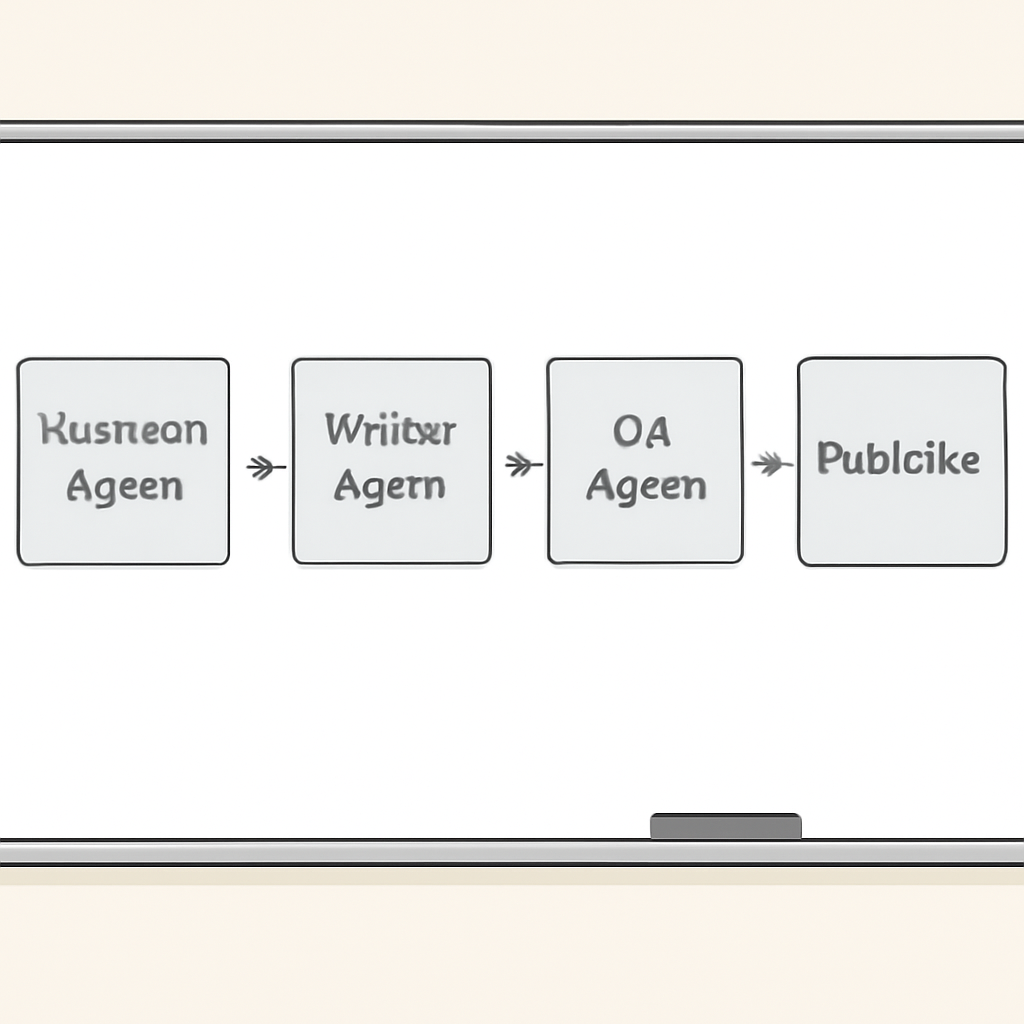
- Composable agent team: Multiple agents with defined handoffs, shared standards, and a workflow that resembles an org chart or SOP.
The key idea is modularity: you can swap roles in and out, tighten or loosen permissions, and evolve the “team” as your business needs change—without rewriting everything from scratch.
Why Businesses Are Treating Agent Teams Like Outsourcing
Traditional outsourcing helps you scale capacity, but it comes with recurring coordination costs: onboarding, management overhead, inconsistent quality, and delays from handoffs. Composable AI agents aim to keep the benefits (speed and scale) while reducing friction by standardizing execution through repeatable workflows.
- Speed: Agents can draft, classify, summarize, and route work quickly—especially for repetitive tasks.
- Consistency: When guided by stable prompts, templates, and checklists, output becomes more uniform than ad hoc human execution.
- Scalability: You can run multiple tasks in parallel without hiring for every incremental workload increase.
- Tool access: Agents can be connected (with guardrails) to systems like email, docs, help desks, and CRMs to do real work, not just generate text.
A practical way to think about it: you’re not outsourcing people—you’re outsourcing processes. The better your process definition, the more value an agent team can deliver.
Common Agent Roles You Can Assemble
Composable agent teams are most effective when each agent has a narrow mandate, clear inputs/outputs, and measurable success criteria. Here are common roles organizations deploy first:
- Research Agent: Gathers internal context (docs, notes) and produces a structured brief for downstream work.
- Drafting Agent: Writes first-pass content (emails, proposals, knowledge base articles) from the brief and templates.
- QA/Policy Agent: Checks for style, completeness, prohibited claims, and adherence to internal rules before anything is sent or published.
- Routing Agent: Classifies requests (e.g., support tickets, inbound leads) and routes them to the right queue with summaries.
- CRM/Operations Agent: Updates records, creates follow-ups, drafts call notes, and prepares next-step tasks for humans.
- Customer Support Triage Agent: Summarizes issues, suggests likely solutions, and prepares response drafts for approval.
- Analytics Agent: Produces periodic summaries from internal reports and highlights anomalies or follow-ups for human review.
Where Composable AI Agents Deliver the Most ROI
The best use cases share a few traits: high volume, repeatable steps, and a clear definition of “good enough” output. Consider starting with these categories:
1) Content and Communications Operations
Agents can handle briefing, drafting, rewriting for tone, and QA—while humans retain final approval for brand risk and factual accuracy.
- Sales sequences and follow-ups (drafted from CRM context)
- Customer email responses (draft + suggested next actions)
- Internal updates (weekly status summaries from project notes)
- Knowledge base maintenance (identify outdated articles, propose edits)
2) Support and Service Workflows
Rather than fully automating support, many teams use agents to reduce time-to-first-response and improve triage quality.
- Ticket classification and priority suggestions
- Summaries of long customer threads
- Draft responses that include troubleshooting steps from approved sources
- Escalation notes with relevant context for specialists
3) Back-Office and RevOps Tasks
Agents can reduce manual updating and context switching by turning conversations and documents into structured system updates.
- Meeting notes to CRM fields (with human review)
- Lead enrichment from internal sources and provided data
- Renewal reminders and customer health summaries
- Procurement/vendor comparisons based on your criteria and inputs
How to “Compose” an Agent Team: A Practical Blueprint
If you want the experience of an outsourced team (reliable delivery, predictable handoffs), composition matters more than model choice. Use this blueprint:
- Pick one workflow, not ten: Start with a single process that has a clear beginning and end (e.g., “turn inbound lead email into a qualified CRM record and follow-up draft”).
- Define roles and handoffs: Write down who does what, what they receive, and what they must output. Treat each output like a deliverable.
- Create templates and checklists: Agents perform best with structured formats (brief template, response template, QA checklist).
- Set permissions by role: Give each agent only the tool access it needs. Keep risky actions (sending emails, editing production data) behind approval steps until proven safe.
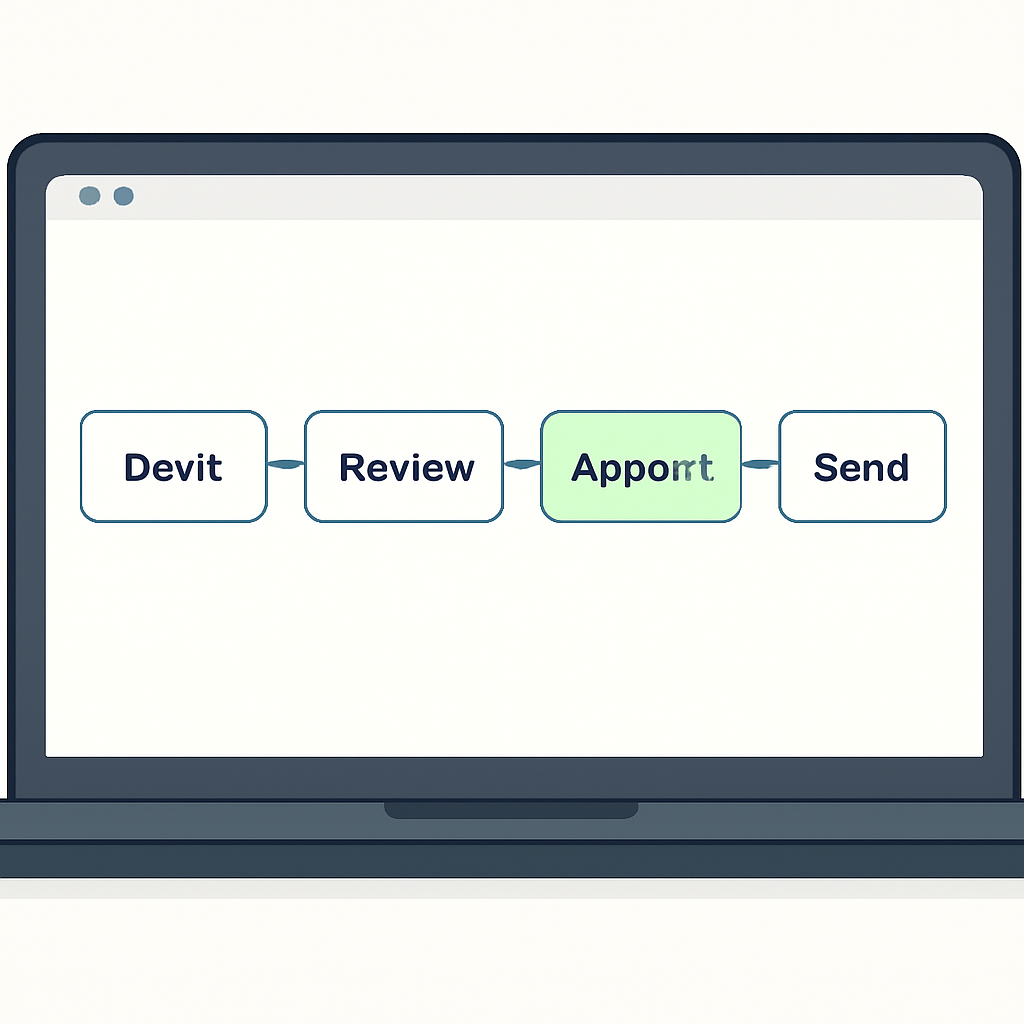
- Add a QA gate: Use a dedicated QA/Policy agent or human review for anything external-facing or high impact.
- Log work and measure outcomes: Track time saved, error rates, rework, and user satisfaction to justify expansion.
- Iterate and swap modules: Replace or refine agents like you would replace a contractor—without rebuilding the whole system.
Governance: How to Keep an Agent Team Safe and Trustworthy
An “outsourced” AI team should be managed with the same rigor as any external partner. The difference is you can encode guardrails directly into the workflow.
- Human-in-the-loop for high stakes: Keep approval for legal, financial, HR, and external PR outputs.
- Source boundaries: Prefer agents that use your approved internal knowledge and provided inputs over open-ended web browsing for critical facts.
- No invented facts: Require agents to flag uncertainty and ask for clarification rather than guessing.
- Data minimization: Don’t pass sensitive personal data unless the workflow truly requires it, and control retention where possible.
- Audit trails: Log prompts/outputs and tool actions so you can review what happened and why.
- Role-based access: Separate “drafting” from “execution” (e.g., drafts email vs. sends email).
If your process involves regulated data or strict compliance requirements, involve your security and legal stakeholders early and keep the first deployments scoped and internal.
What Composable AI Agents Can’t Replace (Yet)
Agent teams are powerful, but they are not a universal substitute for human judgment. They struggle most when tasks require:
- Accountability for consequential decisions (legal, medical, financial decisions)
- Deep domain expertise with ambiguous requirements
- Negotiation, relationship-building, and sensitive interpersonal context
- Ground-truth verification when reliable sources aren’t available in your systems
- Strategy that depends on nuanced market realities and leadership intent
The best results come from pairing agents with humans: agents handle the heavy lifting and consistency; humans provide direction, taste, and accountability.
A Simple Starter Pack: Your First “Outsourced” Agent Team
If you want a low-risk entry point, start with a team that supports internal workflows and drafts outputs for review:
- Intake/Routing Agent: Reads requests, categorizes them, and requests missing details.
- Research Agent: Pulls relevant internal docs and summarizes key points in a brief template.
- Drafting Agent: Produces a response, proposal, or internal document using your template library.
- QA/Policy Agent: Checks against your checklist (tone, completeness, prohibited claims, formatting).
- Human Approver: Reviews and sends/publishes or requests revisions.
Once that pipeline is stable, you can gradually automate more execution steps—while keeping clear approval gates for anything that could create customer, security, or compliance risk.
Conclusion: Treat Agents Like a Team, Not a Tool
Composable AI agents shine when you design them like an outsourced team: explicit roles, clear handoffs, standard deliverables, and strong governance. Done well, they become a scalable operational layer that reduces busywork, speeds up cycles, and frees people to focus on high-leverage decisions.
If you want to move from experimentation to impact, choose one workflow, compose a small set of roles, and measure outcomes. The compounding value comes from iteration—refining your “digital workforce” until it runs with the reliability of a seasoned external team, but with far less overhead.